
Our Services
Polyjacking in Johnson
County, KS
Polyjacking in Johnson County, KS
The Ultimate Guide to Concrete Lifting & Soil Stabilization
If your concrete driveway, patio, sidewalk, or garage floor is sinking, cracking, or uneven, you are dealing with a common Johnson County problem. Our expansive clay soils, heavy spring rains, and freezing Midwestern winters constantly shift the earth beneath your home.
This comprehensive guide breaks down polyjacking (foam jacking)—the cleanest, fastest, and most durable method for restoring settled concrete slabs in Overland Park, Olathe, Leawood, Prairie Village, Mission, and surrounding areas.
What Is Polyjacking?
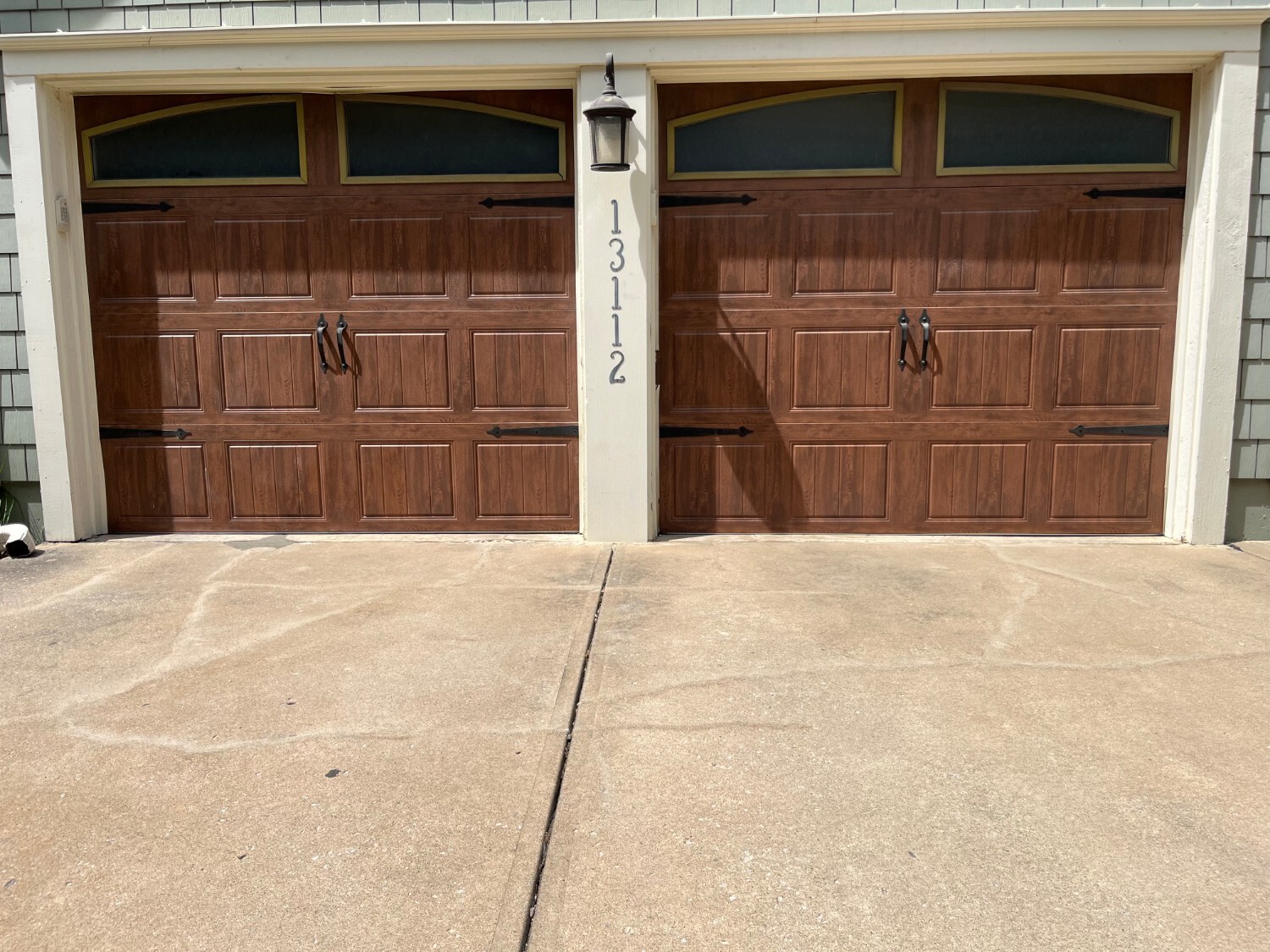
Polyjacking (also known as polyurethane concrete lifting or foam jacking) is a high-tech concrete repair method that utilizes a two-part closed-cell geopolitical polyurethane foam to lift, level, and stabilize sunken concrete slabs.
Liquid polyurethane is injected through tiny, 5/16-inch holes drilled into the concrete. Upon injection, the liquid undergoes a chemical expansion reaction, expanding up to 20 to 30 times its liquid volume.
This expansion exerts enough force to lift heavy concrete slabs while simultaneously compacting the loose subgrade soils underneath.
The Local Soil Problem
Why Concrete Sinks in Johnson County, KS
To understand why your concrete is sinking, you must understand the dirt underneath it. Johnson County, Kansas, sits on a foundation containing highly plastic
expansive clay soils (predominantly from the Grundy and Summit soil series).
The Squeeze (Expansion)
During heavy spring rains or summer thunderstorms, clay absorbs massive amounts of water and expands, pushing upward on your concrete slabs.
The Shrink (Contraction)
During hot, dry July and August stretches, the clay loses moisture, shrinks, and pulls away. This leaves massive empty air pockets, or voids, directly beneath your heavy concrete.
The Washout
Poorly directed gutter downspouts and heavy rains wash away loose, uncompacted subgrade soils, leaving your concrete suspended in the air with zero support.
The Freeze-Thaw Cycle
In the winter, trapped moisture under the slab freezes and expands, then thaws and contracts. This repeated movement breaks down any remaining structural integrity in the soil.
These clay soils are highly reactive to moisture changes
When a 4,000-pound concrete slab is left suspended over an empty void, gravity inevitably wins.
The concrete cracks, drops, and creates dangerous tripping hazards and pooling water situations.
Polyjacking vs. Mudjacking
The Ultimate Comparison
Historically, mudjacking was the go-to solution for concrete leveling. Mudjacking pumps a heavy slurry of water, soil, sand, and cement (often called “slurry” or “mud”) under the slab. While mudjacking is still useful for certain high-volume applications, polyjacking has largely superseded it for residential and commercial precision lifting.
Detailed Breakdown of Key Differences
Hole Size and Aesthetics
Mudjacking
Requires drilling large, unsightly holes (usually 1.5 to 2 inches in diameter) to allow the thick, sandy slurry to pass through. These patches remain highly visible for the life of your concrete.
Polyjacking
Requires tiny, 5/16-inch holes (about the size of a dime). Once patched with non-shrinking concrete grout, these injection points are nearly invisible and blend seamlessly into the existing concrete texture.
Weight and Subgrade Burden
Mudjacking
Mudjacking slurry is incredibly heavy, weighing roughly 100 to 150 lbs per cubic foot. If your concrete sank because the underlying soil was weak, adding thousands of pounds of heavy wet mud can overload the subgrade, causing the entire area to sink even further over time.
Polyjacking
Polyurethane foam is ultra-lightweight, weighing only 2 to 4 lbs per cubic foot. It lifts the concrete without adding any structural burden to the sensitive, shifting soils below.
Waterproofing and Longevity
Mudjacking
Slurry is highly susceptible to water erosion. If water gets under your slab again, it can wash away the mudjacking material, causing the slab to fail again.
Polyjacking
Polyurethane is highly hydrophobic (water-resistant). It acts as a permanent barrier that cannot wash away, erode, or rot. It seals the underside of the concrete slab against future water intrusion.
Curing Time and Usability
Mudjacking
Takes 24 to 72 hours to dry and fully cure. You cannot walk or drive on the area during this time.
Polyjacking
Polyurethane foam cures via a chemical reaction within 15 to 30 minutes. You can walk on your concrete immediately and drive heavy vehicles on it within 24 hours.
The Science of Polyurethane Concrete Lifting
The magic of polyjacking lies in polymer chemistry. The process uses a two-part liquid compound: Isocyanate (Part A) and a Polyol blend resin (Part B).
The Chemical Reaction
When these two liquids are mixed at the tip of the injection gun under high pressure, a chemical reaction occurs, producing a polyurethane polymer while generating carbon dioxide gas. This gas creates millions of tiny, closed-cell bubbles that expand rapidly:
Part A (Isocyanate) + Part B (Polyol) → Polyurethane Foam + CO2 ↑
As the foam expands, it moves along the path of least resistance. It first fills the micro-voids, cracks, and deep pockets in the soil. Once the voids are completely full, the expanding gas exerts upwards of 3,000 to 6,000 pounds per square foot (psf) of lifting pressure—more than enough to lift even the heaviest residential or commercial concrete slabs.
Because the foam has a closed-cell structure, it is highly dense and completely waterproof. It behaves like a solid, highly durable, synthetic underground cushion that supports your concrete forever.
The 5-Step Polyjacking Process
We execute a highly structured, surgical process to lift and restore your concrete with zero mess and maximum precision.
Comprehensive Site Inspection
Prerequisite for a level lift
Our team inspects the settled concrete, measures the drop using laser levels, and identifies the location of underground utilities. We trace cracks and determine the optimal layout for injection points to ensure a level, stress-free lift.
1
Precision Drilling
Drilling 5/16-inch access ports
We drill incredibly small 5/16-inch holes at strategically mapped locations across the sunken concrete slab. These micro-ports serve as the entry pathways for our specialized injection probes.
2
Polyurethane Foam Injection
Controlled lifting and void-filling
We insert our injection gun into the ports and inject the two-part polyurethane foam. The liquids mix, expand within seconds, fill all underground voids, compact the surrounding soil, and gently lift the concrete back to its original grade. We monitor the lift continuously using precision levels.
3
Port Sealing & Cleanup
Aesthetics and surface restoration
Once the concrete is perfectly level, we remove the injection ports. We flush the surfaces clean and fill the tiny holes with a premium, non-shrinking, color-matched concrete grout to ensure a seamless, professional finish.
4
Immediate Return to Service
Zero down-time
The polyurethane foam cures fully within 15 to 30 minutes. You can walk on your newly leveled concrete immediately, and drive your car back into the garage or onto the driveway the very same day.
5
Local Expertise
Areas We Serve in Johnson County, KS
We are a proud woman-owned and family-operated business with over 25 years of combined experience.
We serve homeowners, commercial properties, and municipalities on the Kansas side of the KC metro, including:
Overland Park
Fixing sunken pool decks, patios, and uneven sidewalks near residential neighborhoods.
Olathe
Remedying garage floor settlement, heavy-duty driveway drops, and commercial warehouse slabs.
Leawood
Leveling pristine concrete patios, walkways, and high-end residential entryways.
Prairie Village & Mission
Stabilizing older concrete slabs, front porches, and public walkways near established properties.
What Can Be Lifted and Stabilized with Polyjacking?
If it is concrete and sits on the ground, we can lift, level, and stabilize it
Driveways
Eliminate the annoying “bump” at the entrance of your garage or where your driveway meets the street curb.
Sidewalks & Walkways
Remove dangerous tripping hazards that expose you to personal liability or HOA fines.
Patios & Pool Decks
Level uneven concrete to keep outdoor furniture stable and prevent water from pooling near your foundation.
Garage Floors
Fill empty voids under your garage slab caused by heavy vehicle loads and poor soil compaction.
Porches & Stoops
Secure heavy concrete steps that have pulled away from your home’s main foundation wall.
Commercial Slabs
Level warehouse floors, loading docks, and parking lots with near-zero downtime for your business operations.
Comprehensive Cost & ROI Analysis
| Service Type | Average Cost Range | Expected Lifespan | Time to Use |
|---|---|---|---|
| Polyjacking | $900 – $2,500 | 10 – 15+ Years | 15 - 30 Minutes |
| Mudjacking | $600 – $1,800 | 2 – 5 Years | 24 - 72 Hours |
| Full Concrete Replacement | $3,500 – $9,000+ | 15 – 25 Years | 5 - 7 Days |
Why Polyjacking Saves You Money
While polyjacking has a slightly higher upfront cost than traditional mudjacking, it is significantly cheaper than tearing out and replacing concrete (saving you up to 50% to 70% of the cost of replacement).
Additionally, because polyurethane foam is waterproof and completely stabilizes the underlying soil, it prevents future settlement. Mudjacking often fails within a few years when the slurry washes away, forcing you to pay for the repair twice.
Polyjacking is a one-and-done permanent investment in your property’s value and safety.
Frequently Asked Questions
Is polyjacking safe for the environment?
Yes. Fully cured polyurethane foam is completely inert, environmentally friendly, and non-toxic. It does not leach harmful chemicals or heavy metals into the surrounding soil or groundwater.
How long does polyjacking concrete leveling last?
Polyjacking is designed to be a permanent solution. Because polyurethane foam is hydrophobic (impervious to water) and does not degrade underground, it will last as long as the concrete slab itself.
Can polyjacking fix cracked concrete?
Polyjacking can easily lift and level cracked concrete slabs, but it cannot structurally weld or “glue” cracked pieces back together. Once the slabs are lifted to a uniform height, the remaining cracks should be sealed with a high-quality polyurethane caulk to keep water out.
What is the best temperature for polyjacking in Kansas?
We can perform polyjacking year-round, as long as the ground is not completely frozen deep below the slab. The temperature of the polyurethane materials is controlled within our specialized rigs, allowing for clean, successful applications in both hot Kansas summers and cooler spring/fall months.
Comprehensive Polyjacking Deep-Dive FAQ
1. Soil, Science, and Environmental Dynamics
How exactly does polyurethane foam interact with wet, waterlogged Johnson County soils?
Our geotechnical polyurethane foam is completely hydrophobic, meaning it does not absorb water, mix with water, or break down when exposed to moisture. During injection, if the foam encounters pockets of standing water beneath your concrete slab, it actively repels and displaces the water as it expands.
Instead of diluting (like traditional mudjacking slurry would), it maintains its chemical integrity, expands rapidly, and creates a sealed, waterproof barrier directly beneath the concrete. This prevents future water pooling and eliminates the cyclical erosion that ruins subgrade soils.
Can polyjacking foam withstand the extreme freeze-thaw cycles of Kansas winters?
Yes. The two-part polyurethane we use is engineered as a high-density, closed-cell polymer. Once the chemical reaction completes and the foam cures (within 15 minutes), it forms a rigid, structurally stable matrix that does not shrink, crack, or become brittle when temperatures drop below freezing.
Because it fills 100% of the underground voids, it prevents meltwater from pooling directly under the slab. Without trapped water under the concrete, the destructive “frost heave” mechanism—where freezing water expands and forces concrete upward—is completely mitigated.
Is the polyurethane material safe for backyard gardens, lawns, and local groundwater?
Absolutely. While the raw liquid components (Isocyanate and Polyol) are handled with strict industrial safety protocols inside our service trucks, their chemical reaction results in an inert, completely non-toxic solid plastic polymer.
Once cured, it is highly stable and will not leach chemicals, heavy metals, or environmental pollutants into your lawn, landscaping beds, or the local water table. It is entirely safe for residential neighborhoods, commercial properties, and municipal public spaces.
2. Project Cost, Longevity, and Value Engineering
Is polyjacking truly a permanent fix, or will I need to do this again in 5 years?
Polyjacking fixes the root cause of concrete settlement: poor soil support and empty voids. While the concrete itself may continue to age, the polyurethane foam supporting it will not degrade, rot, settle, or wash away. It stays under your slab permanently.
The only reason a polyjacked slab might settle again in the future is if the deeper, uncompacted earth layers far beneath the foam zone experience major tectonic shifting or severe subterranean erosion. For 95% of residential properties, it is a one-and- done permanent correction.
Why does polyjacking cost more per square foot than traditional mudjacking?
The price difference reflects raw material costs and specialized equipment. Mudjacking uses a cheap, heavy mixture of local dirt, sand, and water. Polyjacking uses advanced, engineered chemical polymers that are manufactured to strict structural specifications.
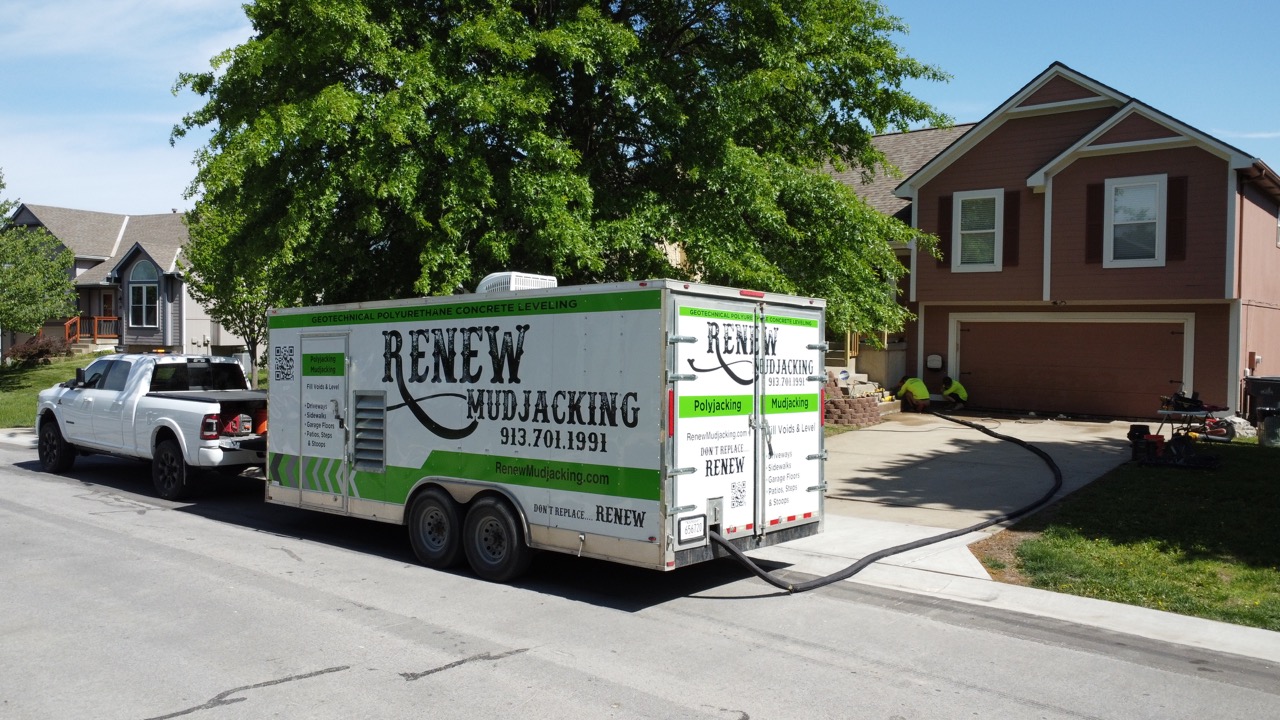
Additionally, polyjacking requires highly sophisticated, climate-controlled box trucks equipped with custom proportioners, heated hoses, and precision injection guns. You are paying for a premium material that lasts a lifetime, requires vastly smaller drill holes, saves your subgrade from heavy load stress, and eliminates the risk of future washouts.
How much money can I actually save by choosing polyjacking over total concrete replacement?
On average, polyjacking saves property owners between 50% and 70% of the total cost of tearing out and replacing an old slab. For example, replacing a sunken three-car concrete driveway can easily cost anywhere from $6,000 to $12,000+ when you factor in demolition labor, hauling fees, landfill dumping costs, framing, rebar installation, and the price of new concrete.
Polyjacking can typically restore that exact same driveway to its original level for a fraction of that cost, while bypassing the 7-day curing delay required before you can drive on new concrete.
3. Structural Capabilities and Limitations
What are the limits of polyjacking? When is a concrete slab too far gone to be saved?
Polyjacking is an exceptional solution for lifting and stabilizing concrete, but it cannot perform miracles on structurally shattered slabs.
[Is your concrete a candidate for Polyjacking?]
├── YES: Slab is mostly intact, dropped in 1-2 clean pieces, or sloped toward the house.
└── NO: Slab is broken into a spiderweb of dozens of small fragments (“alligator cracking”).
If your concrete looks like a jigsaw puzzle with dozens of small, shifting pieces, the foam cannot lift them evenly because there is no remaining structural integrity across the slab. In those severe cases, full concrete demolition and replacement is your only viable path forward.
Can you use polyurethane foam to lift a heavy concrete foundation or a brick chimney?
No. Polyjacking is specifically designed for slab-on-grade concrete (driveways, patios, sidewalks, garage floors, and basement slabs). Heavy load-bearing structures like a home’s main perimeter foundation wall, deep basement footings, or a solid brick chimney require massive lifting forces and deep structural anchors.
Those projects must be resolved using structural steel underpinning piers (like helical or push piers) driven deep into the bedrock, rather than chemical foam injected just below the surface.
Can polyjacking fix a basement floor slab that has sunk or cracked?
Yes. Sinking basement floors are very common when the interior backfill soil settles over time. Polyjacking is the ideal solution for interior basement slabs because our equipment uses thin hoses that can easily run through a standard basement window or doorway.
Because our process requires zero heavy machinery inside your home and creates absolutely no dust, mud, or slurry mess, we can lift and stabilize your interior living space, utility room, or finished basement floor safely and cleanly.
4. Preparation, Aftercare, and Logistics
Do I need to do anything to prepare my property before the polyjacking crew arrives?
Preparation is minimal and straightforward:
Clear the Area: Remove all vehicles, patio furniture, potted plants, or stored items from the concrete slabs scheduled for repair.
Clear a Path: Ensure our crew has a clear path to walk from the street or driveway to the worksite.
Pet Safety: Keep dogs and cats safely indoors during the process, as our truck engines and compressors generate moderate operational noise.
Water Access: While our trucks are fully self-contained, having an accessible outdoor water spigot is helpful for our final cleanup wash-down.
What happens to the cracks left in my concrete after the slab is lifted back into place?
Polyjacking lifts the entire concrete slab back to its proper height and alignment, which often naturally closes up many minor cracks. However, the physical cracks themselves will still be visible on the surface.
Once our lifting process is complete, we highly recommend sealing all surface cracks and control joints with a premium, flexible, UV-resistant polyurethane concrete sealant. This
How noisy is the process, and will it disrupt my neighbors or business operations?
The noise level is comparable to having a standard lawn care or roof repair crew at your home. Our specialized service trucks contain an integrated motor and air compressor that runs while our technicians are actively drilling and injecting foam.
The sound is entirely localized outdoors. Because the process is incredibly fast—with most residential driveways or patios completely finished in just 2 to 4 hours—disruption to your family, your neighbors, or your commercial customers is kept to an absolute minimum.
Get a Free Estimate
Reach out now to schedule your free on-site assessment and see if polyjacking is right for your project.